Mattress Buying Guide
What to Consider When Exploring the Vispring Shetland Superb
A mattress name can catch your attention, but the right choice comes down to the details beneath the sheets. Here’s how to assess the Vispring Shetland Superb’s specifications, compare its feel with your needs, and ask better questions before making a decision.
Published October 31, 2026
Shopping for a mattress can feel a little like trying to solve a mystery from a product description. A model name may sound inviting, and polished language might promise comfort, but neither tells you exactly how the bed will feel beneath your body. The useful clues are more practical: its construction, materials, firmness options, support system, and the way those features suit your sleep habits.
That is a sensible way to approach the Vispring Shetland Superb. Treat the model as a candidate to investigate, not an automatic match. Product specifications can change, retailers may describe options differently, and personal comfort is just that—personal. Before deciding, confirm the current details with the seller or manufacturer and consider how the mattress compares with the beds you already know.
For Hartford-area shoppers, the same advice applies whether you are researching online or visiting a showroom: go beyond the label, take time to test the feel, and ask what is included in the price. A little preparation can turn a hazy browsing session into a much more confident decision.
Start with the specifications, not the sales language
When researching the Vispring Shetland Superb, look for a current, model-specific specification sheet. Focus on the mattress’s layers and materials, its support construction, available comfort choices, dimensions, and care requirements. If an online description uses broad terms such as “supportive,” “luxurious,” or “naturally comfortable,” ask what those words mean in terms of the actual build.
In particular, verify details rather than relying on assumptions based on the brand, product range, or name. Confirm which materials are used in the specific version you are considering, how the mattress is constructed, and whether the available choices differ by size or retailer. If you see conflicting descriptions, ask for clarification in writing before placing an order.
- Materials: What fibers, foams, fabrics, or other components are listed, and where are they used?
- Support construction: What kind of support system does the model use, and is its design described in enough detail to compare with other beds?
- Comfort options: Is the mattress offered in different feels or configurations, and how are those options defined?
- Dimensions: Do the mattress measurements match your bed frame and available bedroom space?
- Care guidance: Does the manufacturer recommend rotating, turning, or otherwise maintaining the mattress?
These questions are not about finding a single magic material or the most complicated construction. They are about understanding what you are evaluating. A clear description helps you compare the Shetland Superb with other mattresses on consistent terms—and gives you a useful reference if you later need to discuss care, comfort, or a warranty concern.
Translate mattress language into your own comfort priorities
Two people can lie on the same mattress and come away with completely different impressions. Body shape, sleeping position, weight distribution, personal preference, and even the pillow in use can change how a surface feels. That is why a firmness label should be treated as a starting point, not a promise that the bed will feel identical to every sleeper.
Before you test or compare the Vispring Shetland Superb, think about what you want your next mattress to do. Do you prefer a cushioned surface, a more buoyant feel, or a balanced middle ground? Are you hoping to ease pressure around your shoulders or hips? Do you often wake feeling that your lower back needs more support? Describing your experience is more useful than arriving with only a firmness number in mind.
It can help to make a short list of what is working—and what is not—on your current mattress. For example, you might like its surface softness but feel that you sink too far, or appreciate its support but find it too firm around the shoulders. Those distinctions can help a salesperson understand the kind of comfort you are seeking without assuming that one feature solves every issue.
Comfort and support are related, but they are not interchangeable. A mattress may feel pleasantly cushioned at first while still failing to keep your body comfortably aligned, or it may feel supportive but too firm for your pressure preferences. Give yourself time to notice both the immediate surface feel and how your body is positioned when you settle into your usual sleep posture.
Consider how you sleep most often
Your usual sleeping position is an important part of a mattress comparison. Side sleepers often pay close attention to pressure at the shoulders and hips; back sleepers may focus on whether the surface feels balanced through the torso and lower body; stomach sleepers may be especially attentive to whether their midsection sinks uncomfortably. These are helpful considerations, not rigid rules. People shift positions during the night, and preferences vary.
If you sleep in more than one position, test the mattress in each one. A bed that feels comfortable for a few minutes on your back may tell a different story when you roll onto your side. If you share a bed, both sleepers should try it when possible. Differences in body size, preferred positions, and sensitivity to movement can make a seemingly obvious choice less straightforward.
In a showroom, spend enough time in your natural position to settle in. Avoid judging the mattress from a quick sit on the edge or a brief lie-down while looking at your phone. Notice whether you feel pressure, whether your spine seems comfortably aligned, and whether changing positions feels easy. If you are testing several models, keep notes. Mattress impressions can blur together surprisingly fast.
Ask how it handles temperature and movement
Temperature preferences can be a deal-breaker. Some sleepers wake feeling too warm, while others want a bed with a cozier surface. Materials and construction can influence airflow and the way warmth is retained, but a product description cannot predict your exact experience. Your bedding, bedroom temperature, sleepwear, and personal comfort all play a part.
Ask what materials are used in the mattress and what the manufacturer says about their performance. Then consider your own history: Do you tend to sleep warm? Do thick comforters make you uncomfortable? Are you looking for a mattress that feels cool to the touch, or is general breathability the priority? A specific answer to a specific question is more helpful than a vague promise of “all-season comfort.”
Movement is another issue to consider if you share a bed. Pay attention to how noticeable a partner’s movements feel when they shift position or get in and out of bed. If possible, test the mattress together. Ask whether its construction is designed to limit motion transfer, but remember that marketing language is not a substitute for trying the bed in conditions that resemble your nightly routine.
Make the showroom test count
A showroom visit is most useful when it is treated as a test drive rather than a performance. Wear comfortable clothing, remove bulky outer layers, and give the mattress time. Lie down as you normally would at home, using a pillow if one is available. If you sleep with a partner, test together and talk honestly about what each of you notices.
Bring your questions with you. Ask the retailer to explain the current construction and any available comfort options for the exact size you want. Find out whether the display model is configured the same way as the mattress that would be delivered. If there are adjustable bases, foundations, or other support requirements, confirm which ones are compatible and whether they affect the warranty.
Keep an eye on the practical details, too. A mattress that fits the room but cannot be moved through a narrow stairwell is a headache waiting to happen. Measure doorways, hallways, stairs, and the bed frame—not just the bedroom floor. If you live in an apartment or older Hartford home, delivery access and setup logistics can be especially important to check before purchase.
Read the terms as carefully as the comfort description
Even a mattress that feels promising in a store deserves a closer look at the terms of sale. Ask for the full price, including delivery, setup, removal of an old mattress, and any applicable fees. Confirm the estimated delivery window and what happens if the item cannot be brought into the home or the delivery appointment needs to change.
Then review the return or comfort-exchange policy. Does the retailer offer one? Is there a required adjustment period? Are pickup or restocking fees charged? Does the policy apply to the specific model and configuration you plan to buy? A return window can offer useful reassurance, but only if you understand its conditions before the mattress arrives.
Check the warranty separately from the return policy. Ask what is covered, for how long, and what could make a claim ineligible. Understand the foundation requirements and care instructions, and keep the purchase documents somewhere easy to find. A warranty is not a guarantee that every comfort concern will be covered; its terms should be read rather than assumed.
Think about the full sleep setup
A mattress does not work in isolation. The bed frame or foundation, pillow, sheets, room temperature, and mattress protector can all affect how the sleep surface feels. If you are changing mattress types or thickness, check whether your current frame is compatible and whether the new height will work with your bedside furniture.
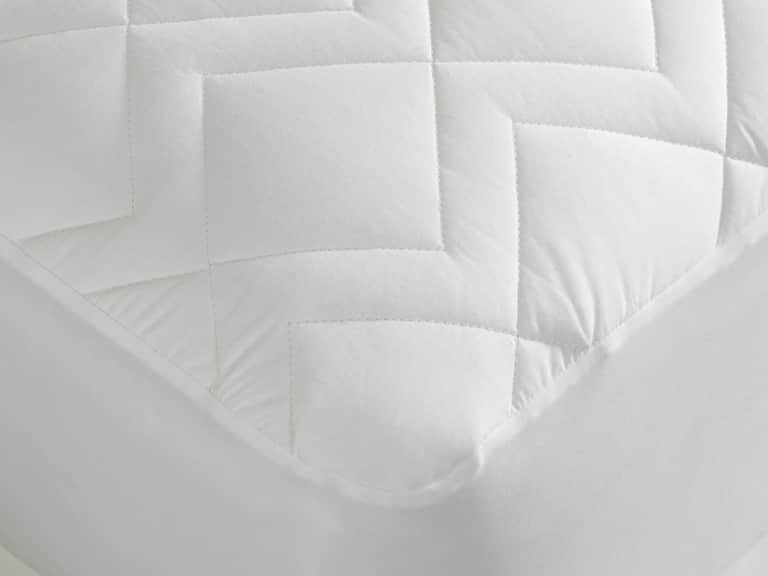
Protection is worth considering, particularly if you want to guard against spills and everyday wear. A pad can add a little surface cushioning, but it may also alter the feel of the mattress, so choose one with your comfort preferences and the mattress-care instructions in mind. For example, the DownTown Company Waterproof Quilted Mattress Pad is a cotton-covered, quilted option designed to provide moisture protection. Check its fit and care details, and make sure any protector you choose is compatible with the mattress you purchase.
Do not overlook pillows. A pillow that is too high or too flat can make a comfortable mattress feel less comfortable by changing the position of your neck and shoulders. If you are evaluating a new bed because you wake with discomfort, consider whether your pillow or sleep setup may also be contributing. For persistent or significant pain, a qualified healthcare professional can help assess the issue; a mattress should not be treated as a medical solution.
A simple comparison checklist
Use this checklist when comparing the Vispring Shetland Superb with other mattresses. It keeps the conversation grounded in facts and your own experience instead of relying on a memorable name or a quick impression.
- Have I confirmed the current, model-specific materials and construction?
- Do I know which comfort options are available in the size I need?
- Have I tested the mattress in my usual sleeping positions?
- Does the surface feel comfortable at my shoulders, hips, back, or other pressure points?
- Have I considered temperature and movement preferences, especially if I share the bed?
- Will the mattress work with my existing frame or foundation?
- Have I measured the room and the route from the entrance to the bedroom?
- Do I understand the total price, delivery arrangements, return policy, and warranty?
- Have I compared it with at least one alternative using the same questions?
If you are shopping from Hartford or nearby communities, local retailers may let you experience a mattress in person and discuss delivery details for your area. Ask what is currently available to test and whether the showroom model reflects the configuration being sold. If you are buying online, look for clear specifications and written policies, and contact the seller when important details are missing.
The bottom line on the Vispring Shetland Superb
The Vispring Shetland Superb may be worth exploring if its verified construction and available options line up with your preferences—but the model name alone cannot determine whether it is right for you. Start with the current specifications, then translate them into questions about support, pressure comfort, temperature, movement, and daily care.
Most importantly, give your own experience a vote. Test the bed in the positions you actually sleep in, compare it with alternatives, and make sure the purchase terms make sense for your household. A thoughtful decision does not require memorizing every mattress term. It means knowing what you need, confirming what the mattress offers, and having enough information to tell the difference.
That approach can make mattress shopping feel less like guessing and more like a practical conversation—one focused on the comfort you are seeking, the details you can verify, and the sleep setup that works in your home.